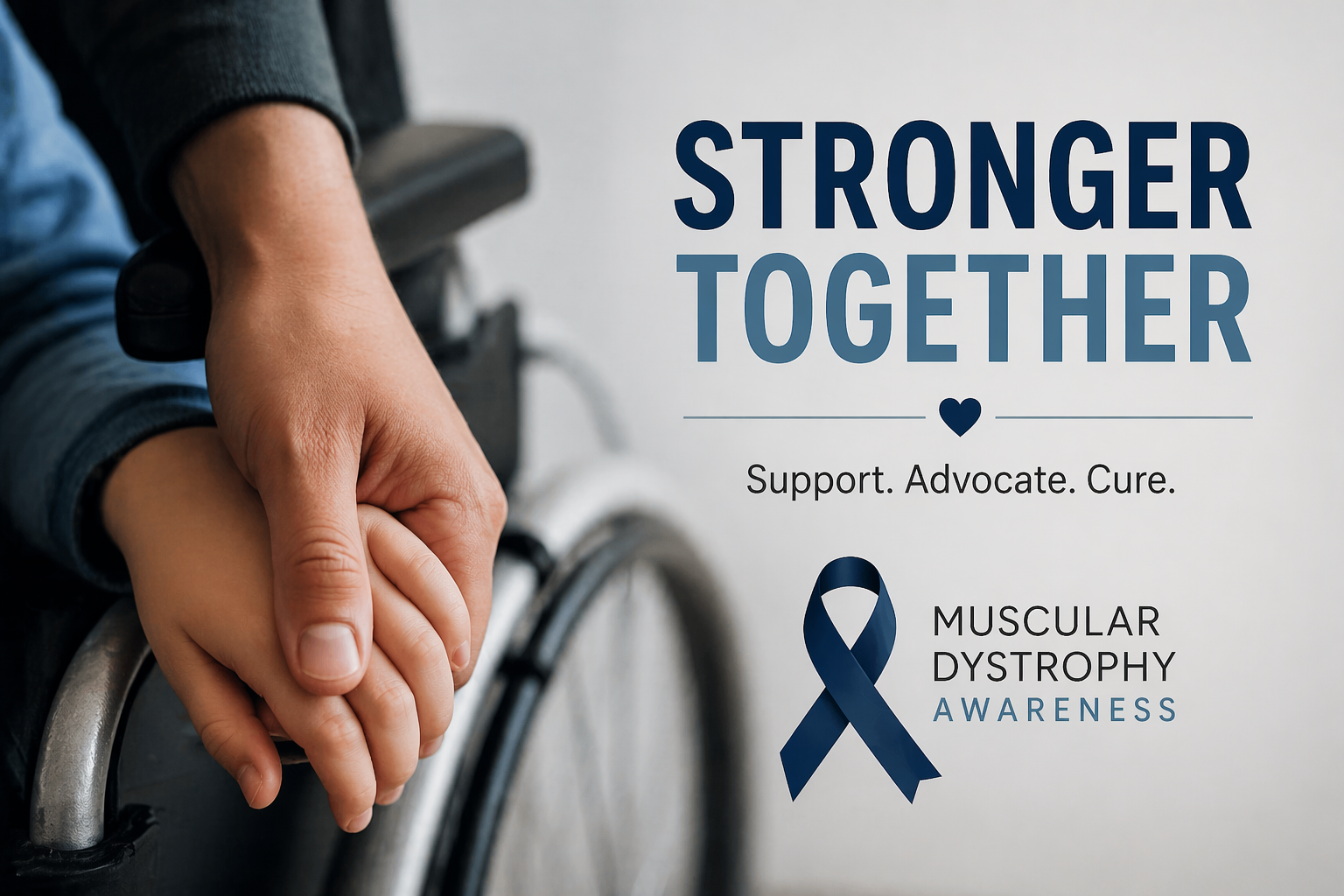
Muscular dystrophy (MD) is a group of genetic disorders that gradually weaken the body’s muscles over time. While the condition can affect people differently depending on the type and severity, all forms of muscular dystrophy share one key feature: progressive muscle loss that impacts movement, strength, and independence.
What Is Muscular Dystrophy?
Muscular dystrophy refers to a collection of inherited conditions caused by mutations in genes responsible for healthy muscle function. These genes normally help produce proteins that are essential for building and maintaining muscle fibers. When these proteins are missing or not working correctly, muscles become damaged over time and are replaced by fatty or fibrous tissue.
There are several types of muscular dystrophy, including:
- Duchenne muscular dystrophy (DMD) – the most common and severe form in children
- Becker muscular dystrophy – similar to DMD but generally progresses more slowly
- Myotonic dystrophy – affects both muscles and other body systems
- Limb-girdle muscular dystrophy – primarily affects the hips and shoulders
Each type varies in age of onset, severity, and progression.
What Causes Muscular Dystrophy?
Muscular dystrophy is caused by genetic mutations, meaning it is typically inherited from one or both parents. These mutations affect proteins such as dystrophin, which plays a critical role in protecting muscle cells during movement.
Without these proteins, muscle cells are more easily damaged. Over time, the body is unable to repair the damage effectively, leading to muscle weakness and degeneration.
In most cases, MD is passed down through families, but spontaneous mutations can also occur without a family history.
Symptoms of Muscular Dystrophy
Symptoms depend on the type of muscular dystrophy, but common signs include:
- Increasing muscle weakness over time
- Difficulty walking, running, or climbing stairs
- Frequent falls or trouble with balance
- Muscle stiffness or cramps
- Loss of muscle mass
- Fatigue after light physical activity
In some forms of MD, the condition can also affect the heart and respiratory muscles, which may lead to more serious complications.
How Is It Diagnosed?
Doctors use a combination of methods to diagnose muscular dystrophy, including:
- Genetic testing to identify mutations
- Blood tests to check for elevated muscle enzymes
- Muscle biopsies to examine tissue damage
- Physical exams and neurological assessments
Early diagnosis can help individuals and families better understand the condition and plan for long-term care.
Treatment and Management
Currently, there is no cure for muscular dystrophy, but there are treatments that can help manage symptoms and improve quality of life.
Common approaches include:
- Physical therapy to maintain mobility and flexibility
- Occupational therapy to support daily activities
- Medications such as corticosteroids to slow muscle degeneration
- Assistive devices like braces, wheelchairs, or mobility aids
- Cardiac and respiratory care when needed
Research is also advancing rapidly in areas such as gene therapy, which aims to address the root genetic causes of the disease.
Living with Muscular Dystrophy
Living with muscular dystrophy presents challenges, but many individuals continue to lead meaningful, active lives with the right support systems in place. Families, caregivers, and medical professionals play a key role in helping individuals adapt as the condition progresses.
Advances in accessibility, adaptive technology, and medical care continue to improve independence and quality of life for those affected.
The Future of Research
One of the most promising areas of research is gene-based therapy, which aims to repair or replace faulty genes responsible for muscular dystrophy. Other approaches include stem cell therapy and drug development targeting muscle regeneration.
While these treatments are still being developed, they offer hope for significantly improving outcomes in the future.
Conclusion
Muscular dystrophy is a complex genetic condition that affects muscle strength and function over time. Although there is currently no cure, ongoing research and supportive care options continue to improve the lives of those affected.
As science progresses, the future holds promising possibilities for better treatments—and potentially a cure—for muscular dystrophy.
 Inclusive Tech Lab