 Inclusive Tech Lab
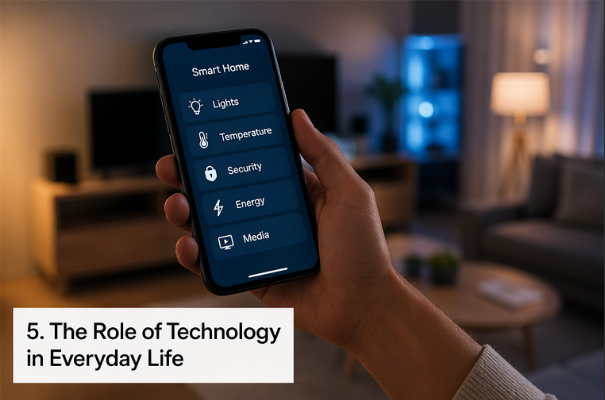
Technology is no longer something we actively “use” occasionally—it is something we continuously live within. From communication to transportation, entertainment to education, digital systems shape much of our daily experience.
One of the most significant impacts of technology is connectivity. Information can now be shared instantly across the world, enabling collaboration at a scale that was previously impossible. This has transformed industries, education systems, and even personal relationships.
However, this constant connectivity introduces new challenges. The boundary between work and personal life has become less distinct, especially with mobile devices making communication always available. Without intentional boundaries, it becomes easy to remain mentally “on” at all times.
Another important shift is the increasing automation of everyday tasks. From recommendation systems to smart home devices, technology is gradually reducing the amount of manual decision-making required in daily life. This can improve efficiency, but also raises questions about dependency and awareness.
Looking ahead, technology will likely become even more integrated into physical environments through wearable devices, augmented reality, and intelligent systems that respond to context in real time. The challenge will be ensuring that these systems enhance human capability rather than replace intentional decision-making.
The most effective approach is not rejection or blind adoption, but thoughtful integration—using technology as a tool while maintaining control over how it shapes attention, behavior, and priorities.